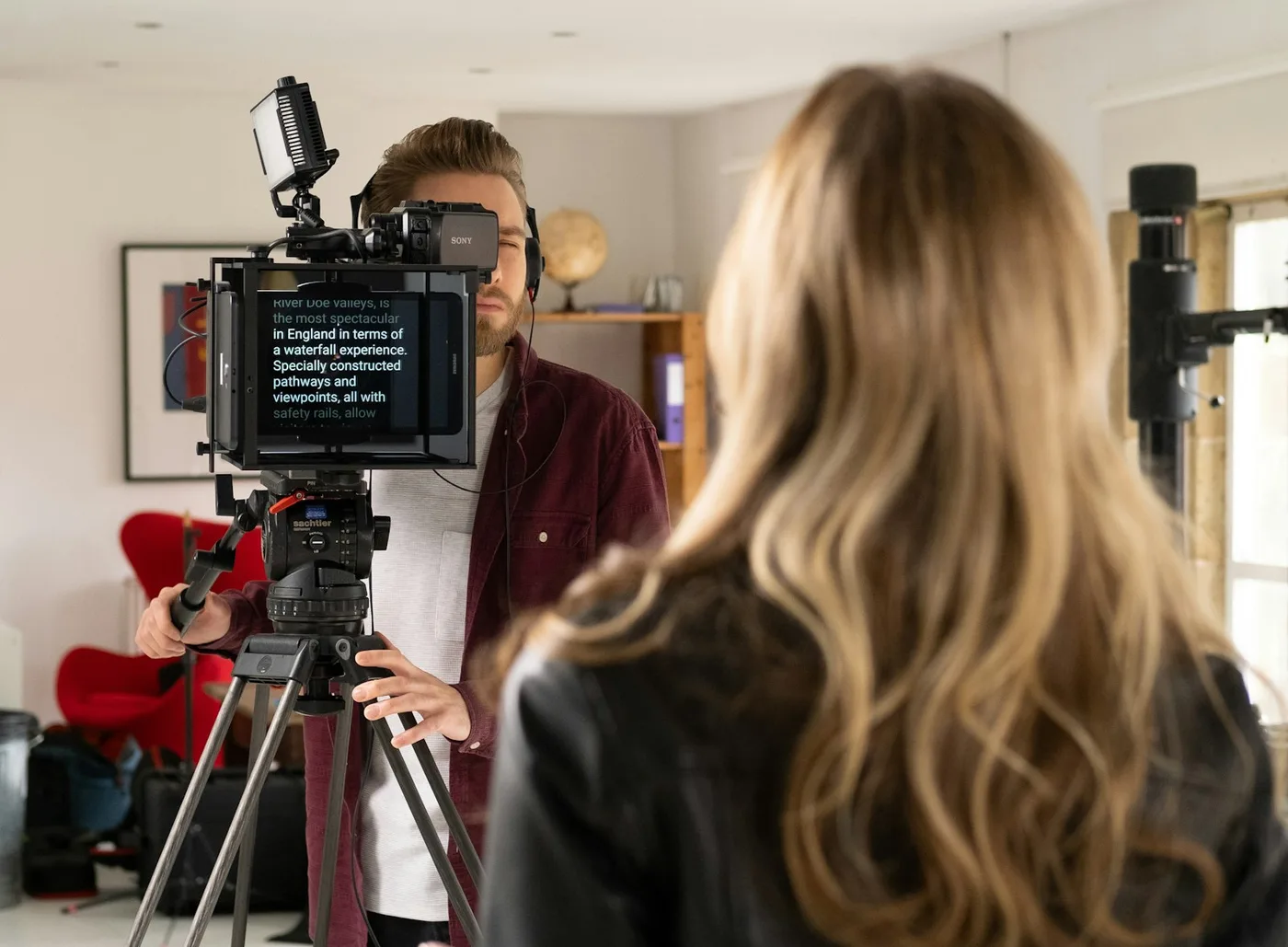
How to practise with a teleprompter
- Read it once for meaning. Before you read out loud, know what each line is for. You can't sound natural saying words you haven't understood.
- Start slow. Set the speed about 20 words per minute below your normal pace, so the text waits for you rather than the other way round.
- Read ahead. Keep your eyes a few words in front of your voice. It's what stops the flat, word-by-word sound of someone reading.
- Keep the text near the lens. Put the reading line at the top of the screen, right under the webcam, and use narrow lines so your eyes don't sweep from side to side.
- Speed up a little each run. When the scroll feels slow, raise it by 5 or 10 words per minute until it matches the way you talk.
- Record and watch it back. You'll see straight away whether your eyes drift or your voice goes flat. Most people only need three or four runs to look relaxed.
There's more on delivery in how to read a teleprompter without looking like you're reading, and on the right text size in our teleprompter font size guide.
Write your own practice script
The best practice script is the one you'll actually record. Write it the way you talk, in short sentences, and size it to your slot: at about 150 words a minute, a one-minute video is about 150 words. Our speech length calculator turns any length into a word count, and how to write a video script walks through the structure.
Mark sections with a line that starts with #, and add [pause] or [breathe] where you want a beat. The online teleprompter shows them as labels and leaves them out of the timing.
Practising on a Mac?
Avocado is a free teleprompter for Mac that reads the same format. It puts the script in the MacBook notch right next to the camera, stays hidden from Zoom and screen recordings, and can follow your voice, so the text keeps pace with you instead of the other way round. Its session history tracks your pace from one run to the next, so you can see your practice paying off.